
My grand father was a Schutterij, Stamboeknummer 4052
Daily life on the Dutch Caribbean
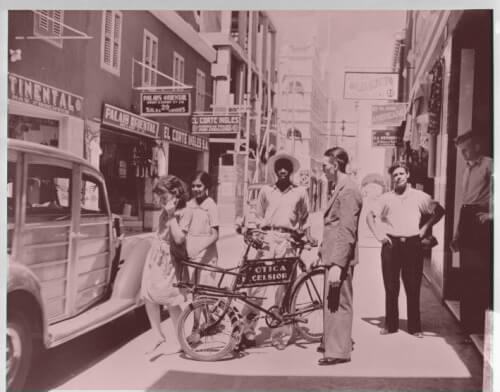
When the Second World War reached the Dutch Caribbean islands, they — like the rest of the world — entered a time of uncertainty. For many, daily life continued almost as usual, especially in the early years. But for others, the war brought sudden and lasting changes. In this section, we explore how the people of Curaçao and Bonaire experienced the war — some with quiet resilience and others through direct upheaval.
Life goes on
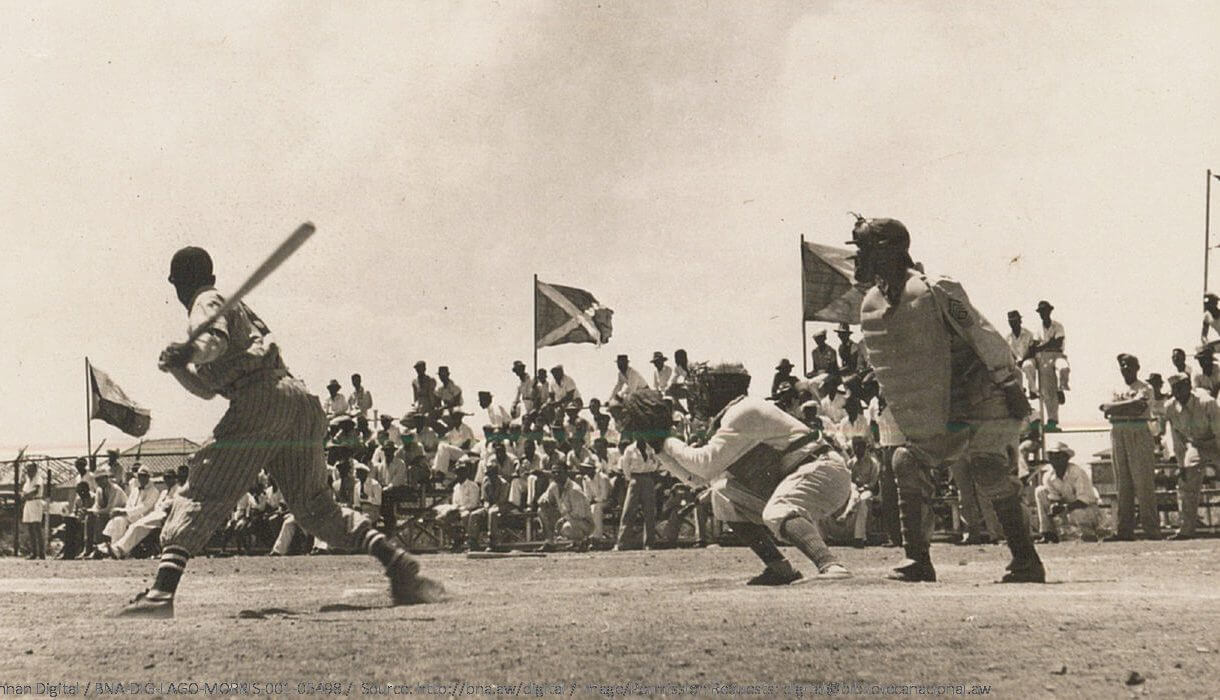
On the one hand, life on the Islands continued its course. After Governor Wouters officially proclaimed war, most of the island’s population did not immediately feel its impact. People still worked, went to school, and gathered for music and theatre performances. The arts remained an important outlet, with local productions and concerts bringing moments of joy and reflection.
Yet over time, the effects of the war began to show. Scarcity of certain food items became more common, and rationing was introduced. Some goods were considered luxury items and could only be obtained with restrictions—these were listed on what became known as the ‘Caviar List’, a document that now offers insight into everyday life during wartime.
To stay safe from German submarine attacks, the island observed a strict blackout after sundown on Curaçao. Lights in homes and on streets had to remain off, forcing people to adjust how they cooked, ate, and read in the dark. This unique atmosphere even inspired artistic responses. One example is a metal sculpture by Maximiliano Nepomuceno that captures the wartime mood through symbolic tin art.
Community support also played a role during this period. Many individuals and organisations raised funds to help the Netherlands through the war years. Some companies even kept records of which employees contributed—reminders of a shared sense of duty and connection.
Those who were sent away
For some residents of Curaçao, the war brought immediate and life-altering consequences. In May 1940, shortly after the Netherlands was invaded, individuals with German or Austrian nationality—among them ship crews, civilians, and suspected Nazi sympathisers — were arrested on Curaçao. Roughly 200 people were sent to an internment camp on Bonaire, where they would remain for much of the war.
A temporary camp was first established using old school buildings, but it was soon replaced with a more permanent facility. Surrounded by barbed wire, the camp included newly constructed barracks and separate housing for guards. The security forces were made up of members of the Schutterij, marines, and military police. For many of those interned, life was marked by uncertainty, isolation, and the loss of homes and businesses left behind in Curaçao.

As the war continued, the camp on Bonaire faced challenges with overcrowding and internal tensions. In response, a group of Jewish refugees—who had also been caught up in wartime displacement—were moved to the nearby Guatemala plantation. While they lived under less strict conditions than those in the main camp, they still lacked full freedom of movement.
This chapter in the history of the islands reflects the wide-reaching impact of global conflict. Even far from the battlefield, people experienced the war in deeply personal and often painful ways. Archival photos and historical records help preserve these stories and give insight into the human cost of wartime policies.
Click on the blocks below for more info about these artefacts.
Song ‘Skuridat’, Julio Perrenal
Song ‘Skuridat’, Julio Perrenal
Poets Jules de Palm, Rene de Rooy and Pierre Lauffer, who called themselves Julio Perrenal, composed and published Cancionero Papiamento in 1943. They were pioneers in composing songs in Papiamentu. Most about the war.
‘Skuridat’ deals with the effects of the blackout. Imposed to obscure targets on the island for the German U-boats. This is a 2006 recording of the song by Pierre Lauffer Jr.
Car lamp prepared for blackout
Car lamp prepared for blackout

To make German torpedo attacks more difficult, a law was enforced to dim or light all the lights after sunset. When driving a car, the front lamp was dimmed with a cloth. Some people started sewing those and selling them.
Source: Archivo Nashonal Kòrsou
Donation letter from the Marchena Moron & CO.
Donation letter from the Marchena Moron & CO.
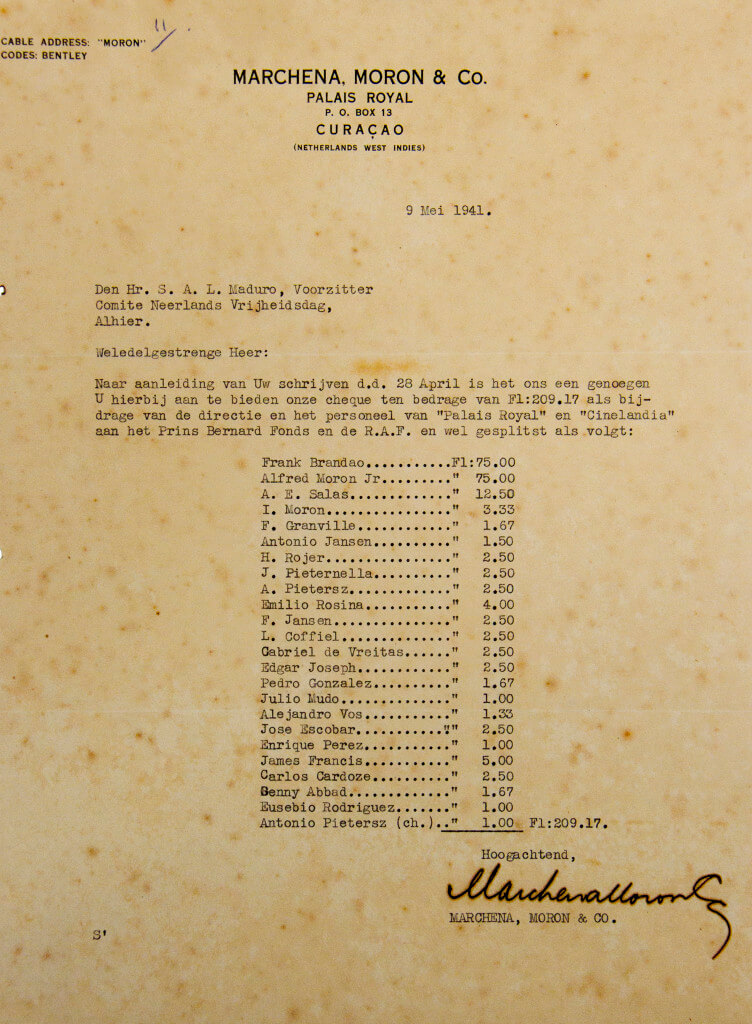
Businesses such as Marchena Moron & Co would encourage their employees to make donations to support the war bereaved. This letter shows contributions by its employees and management.
Source S.A.L. (Mongui) Maduro Foundation
Song: Bula Waya (Jumping over the Fence)
Song: Bula Waya (Jumping over the Fence)
Pedro Pablo ‘Dada’ Medardo de Marchena was one of those people interned in the camp in Bonaire who was neither German nor Nazi. He was considered a threat because he was believed to be a communist sympathizer. During his stay in the camp he composed ‘bula waya’, which tells of his desire to meet the female beauties he could see walking outside the fence of the camp.
Recording by Padu del Caribe (Juan Lampe) with the Netherlands Antilles Orchestra in 1952.
