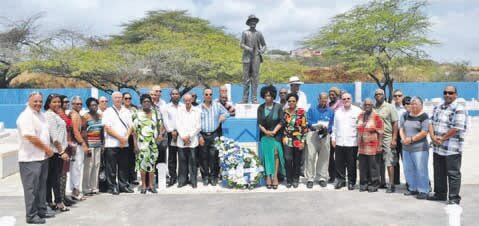
My grand father was a Schutterij, Stamboeknummer 4052

Tribute to our war victims
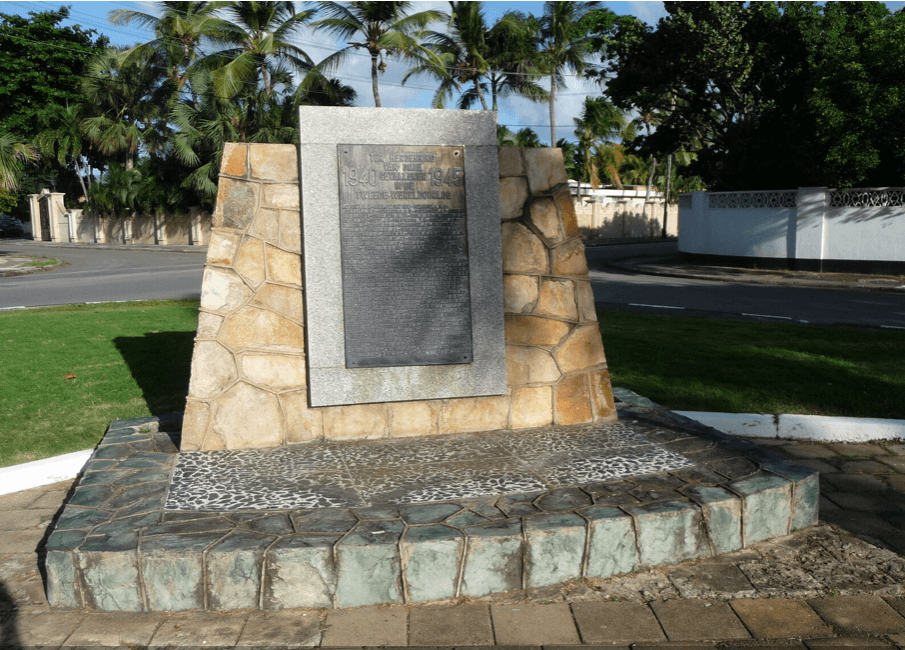
World War II left a lasting impact on all the islands of the former Netherlands Antilles. From the threat of submarine attacks to the internment of civilians, the war shaped local life in profound ways. Every year on 4 May, we honor all victims of World War 2 on Aruba, Bonaire, Curaçao, Saba, St. Eustatius and St. Martin, as has become our tradition since 1945. But 1957 was a special year, because on all the islands WW2 monuments were unveiled. The names of the war victims were engraved on the monuments.
Aruba and Curaçao
On Aruba, while the exact number of war victims is unknown, the effects of the war were deeply felt. The German attack on the island, the presence of foreign military troops, and the internment of sailors and civilians marked a period of uncertainty and disruption.
Curaçao also faced significant losses. Many Curaçaoans died while working on ships torpedoed by German submarines. Others lost their lives in local defense units such as the Schutterij. In 2015, the exhibition Guera na Kòrsou – Curaçao at War featured a special memorial section and launched the “Give Them a Face” initiative to encourage the public to share photos of the fallen. By then, 160 names of war victims from across the Netherlands Antilles had been officially recorded.
Bonaire, Saba, and Sint Eustatius
Other islands were not spared. On Bonaire, Saba, and Sint Eustatius, most casualties were sailors who perished when their ships were attacked at sea. On Saba, eleven sailors were lost this way, and Thelma Esther Polak, a Jewish nurse born on the island, died in the Sobibor concentration camp in 1943. Her name was later added to the local war monument.
Though the experiences of each island differed, they are united in their tribute to those who were lost. Their names remain a powerful reminder of the shared wartime history of the Netherlands Antilles.

Chinese sailors
April 1942, right in the middle of World War II. Chinese labourers from Rotterdam are employed as stokers on Shell oil tankers. A dangerous job, on menial wages. They start a strike. As the strike becomes more and more grim, the police and guards from the refinery on Curacao intervene. Mercilessly they shoot and kill fifteen Chinese. This tragic event is an important part of the island’s wartime history.