
My grand father was a Schutterij, Stamboeknummer 4052
Defending our islands
During the Second World War, the Dutch Caribbean played a crucial—though often overlooked—role in global defense. Its vital oil refineries, strategic harbors, and airfields made the region a key player in the Allied war effort. At the same time, local communities stepped up to protect their islands, sometimes under great pressure and uncertainty.
Today, the legacy of these wartime years lives on through preserved sites, oral histories, and public memory. This section explores how each island contributed to the defense effort and how that history continues to shape our heritage.
Curaçao
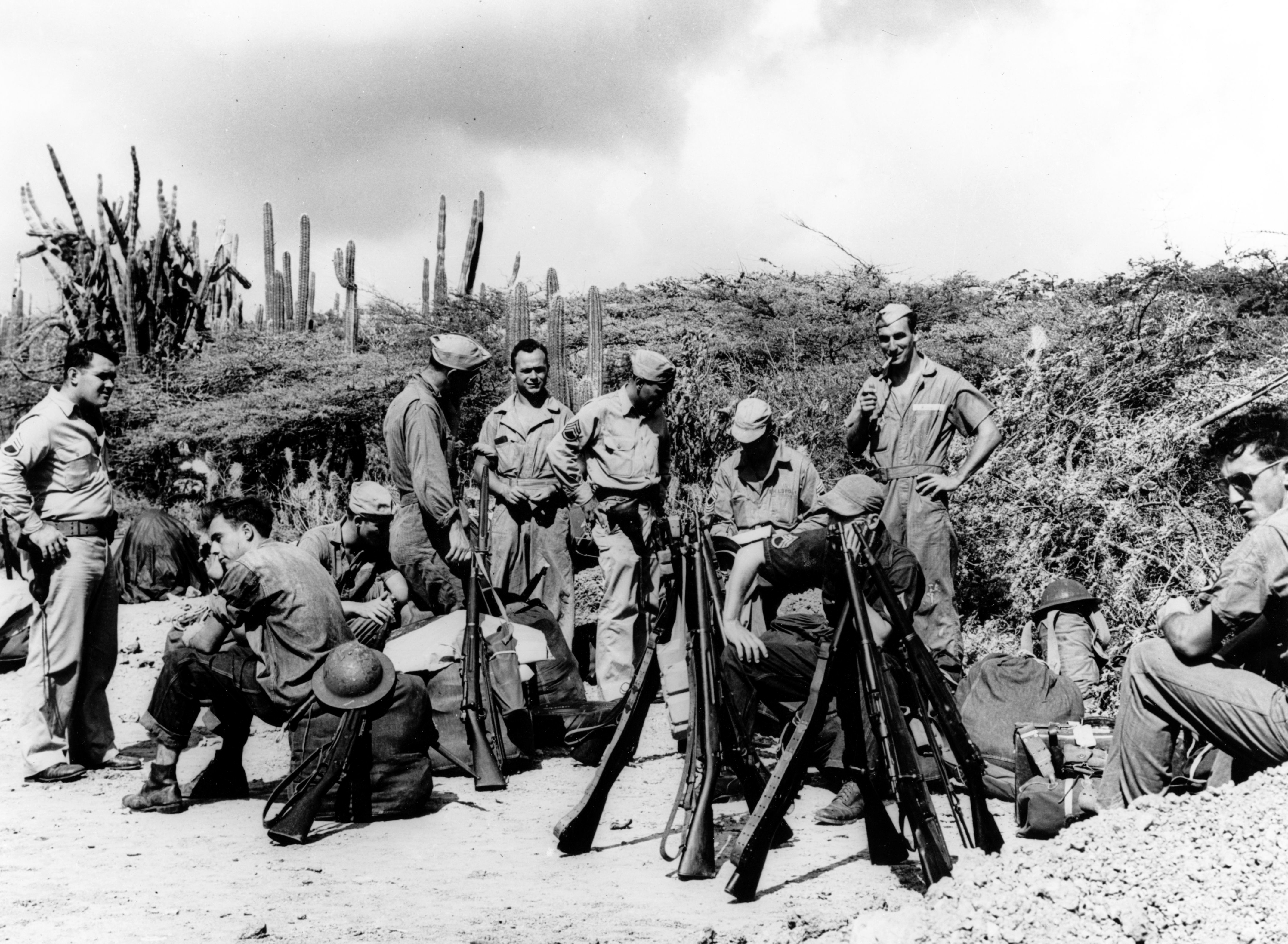
Curaçao served as a central hub for regional defense during the war. With the Isla oil refinery and large storage facilities at Bullenbaai, the island was vital to Allied operations. It also became the command center for all Dutch Caribbean forces, with headquarters eventually housed in historic Fort Amsterdam. British forces arrived early in the war, followed by over 1,500 American troops in 1942. Their presence helped repel threats from German submarines that patrolled nearby waters. The Americans also improved infrastructure, including the Hato airfield, where remnants of wartime steel landing strips can still be seen today. Local involvement was significant. The Schutterij, a volunteer militia, grew to nearly 3,000 members and played a key role in maintaining order and coastal defense.
Aruba
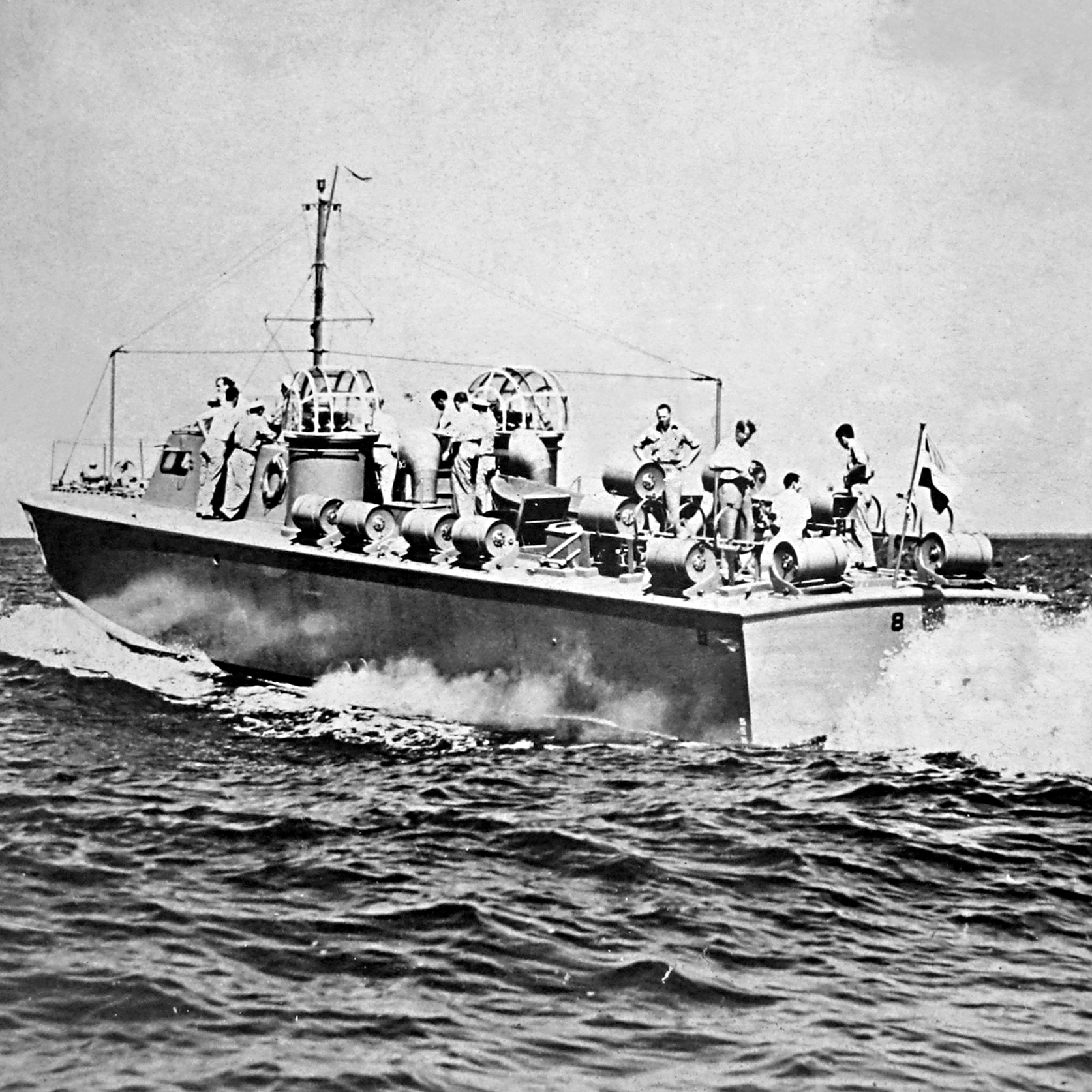
Aruba’s strategic importance during the war lay in its two major oil refineries — Eagle and Lago — which were critical to the Allied fuel supply. As a result, the island became a priority for defense planning and military presence. The Dutch and Allied forces concentrated their efforts on protecting key sites, including the harbors at Oranjestad and San Nicolas, the Dakota Field airfield, and anchorage points along the southern coast, particularly near Paardenbaai and the Lago refinery. Like on Curaçao, defenses were strengthened in response to the threat of German submarine attacks in the region. Fortifications, patrols, and military coordination helped secure Aruba’s vital oil infrastructure and shipping routes. Today, this period remains a significant chapter in Aruba’s wartime heritage, with traces of military installations and stories passed down through generations.


Bonaire
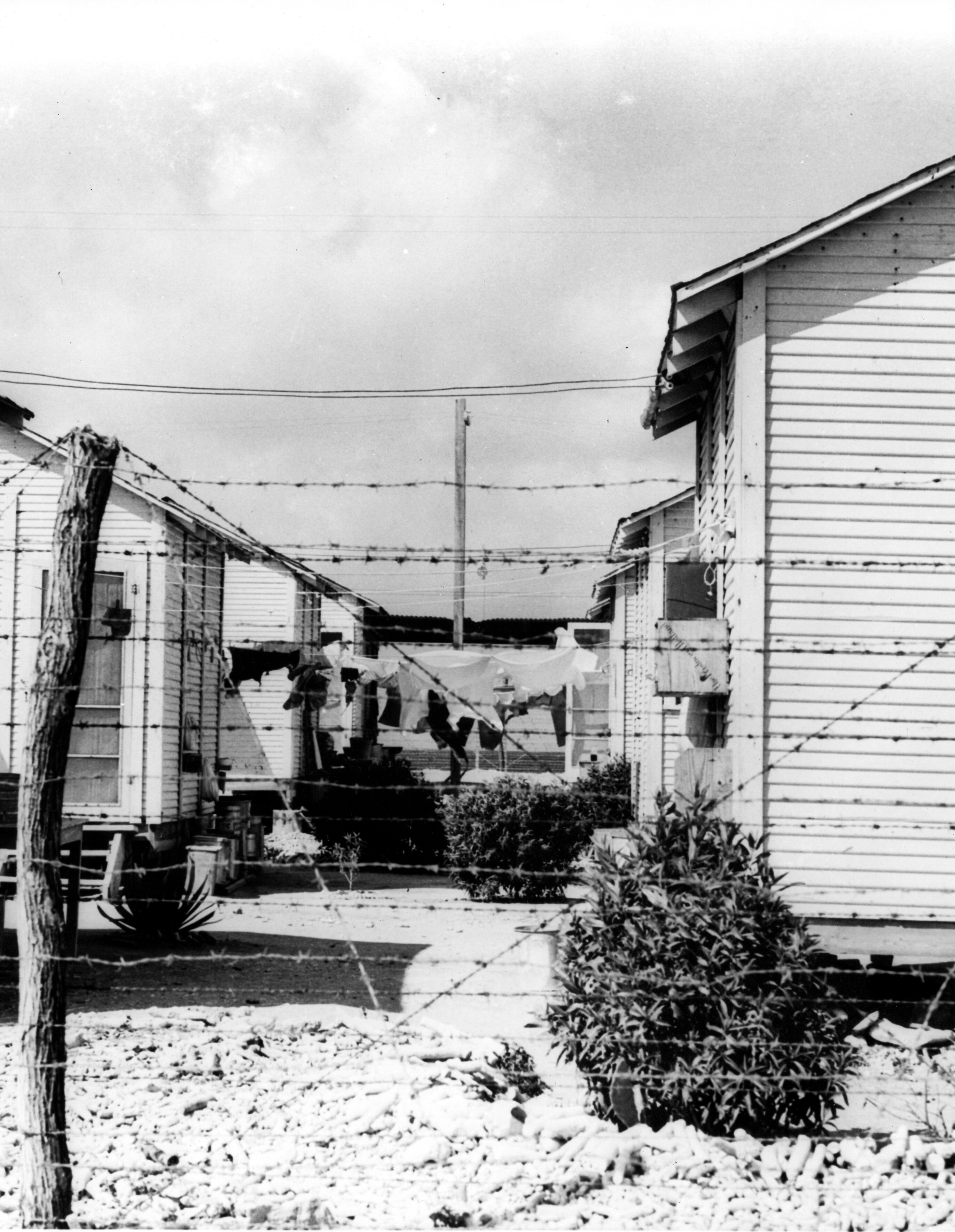
Bonaire had no oil installations and was initially of lower strategic importance. However, this changed in May 1940 when individuals with German or Austrian nationality — including ship crews, civilians, and suspected Nazi sympathizers—were interned on the island. A camp was built with barbed wire, barracks, and guard facilities. The guards included Schutterij members, marines, and military police. Later in the war, when the internment camp faced challenges, Jewish refugees were housed on the nearby Guatemala plantation under lighter restrictions, although they still lacked full freedom of movement. In 1942, the Americans arrived and constructed a radar station, an airfield, and a radio station. Lightly armed troops were stationed to guard the airfield and harbor.
Saba, Sint Eustatius, and Sint Maarten
The smaller islands of Saba, Sint Eustatius, and Sint Maarten remained relatively untouched by the direct effects of the war. On Saba and Sint Eustatius, no military troops were stationed, and the islands experienced a quiet and uneventful wartime period. Their remote locations and limited strategic infrastructure offered a degree of natural protection.
Sint Maarten saw slightly more activity. After Germany invaded the Netherlands in May 1940, French troops briefly crossed over from the French side of the island as a precaution. They withdrew shortly after France’s capitulation, and the island returned to a state of calm. In 1942, construction began on a new airfield, which was completed and officially opened in 1943 during a celebratory visit by Princess Juliana. A small Dutch military unit of 20 soldiers was assigned to guard the airfield and the harbor. While these islands were spared from direct attacks or large-scale conflict, the war years still left subtle marks on the communities—marks that remain part of their local history and heritage.
Click on the blocks below for more info about these artifacts.
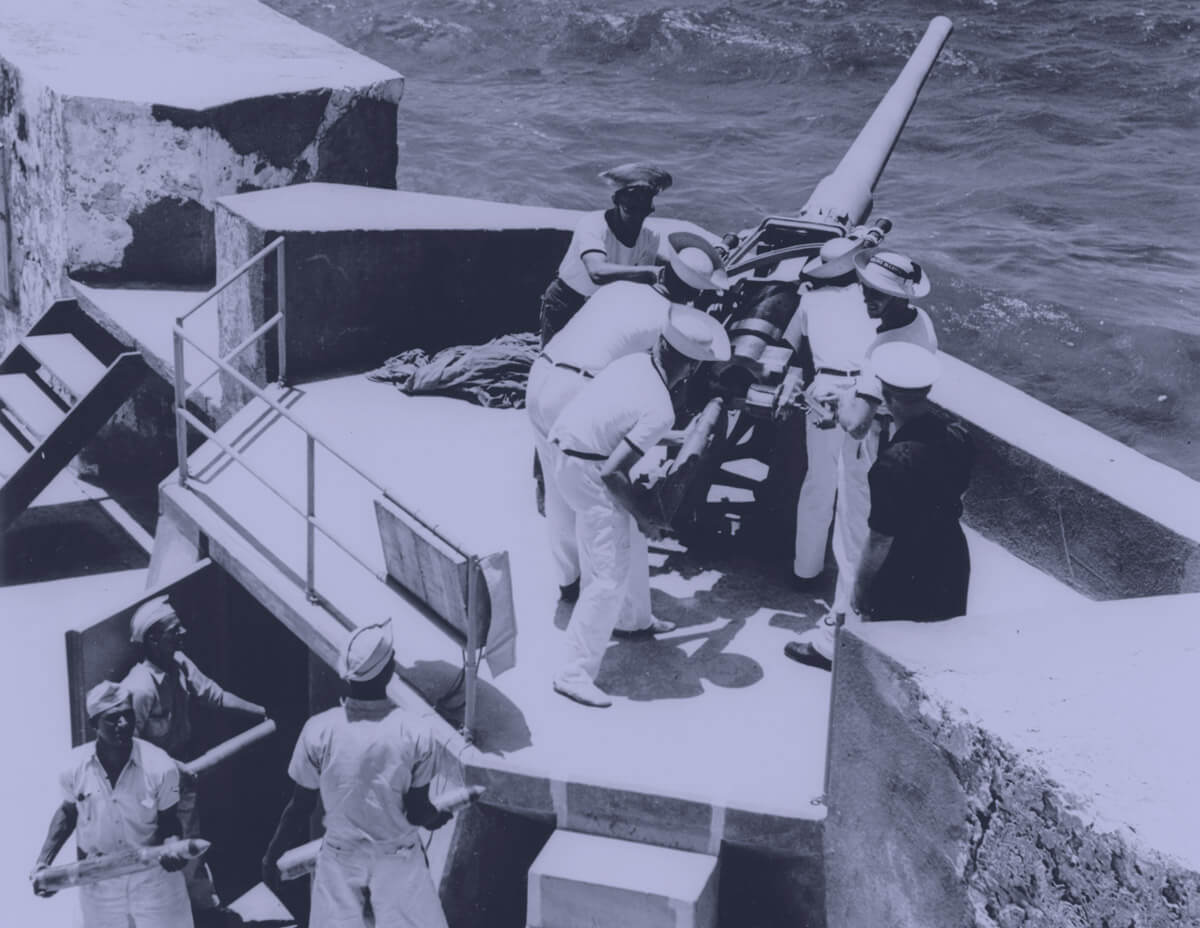
‘Schutters’ alongside cannons of World War 1, Punda
‘Schutters’ alongside cannons of World War 1, Punda
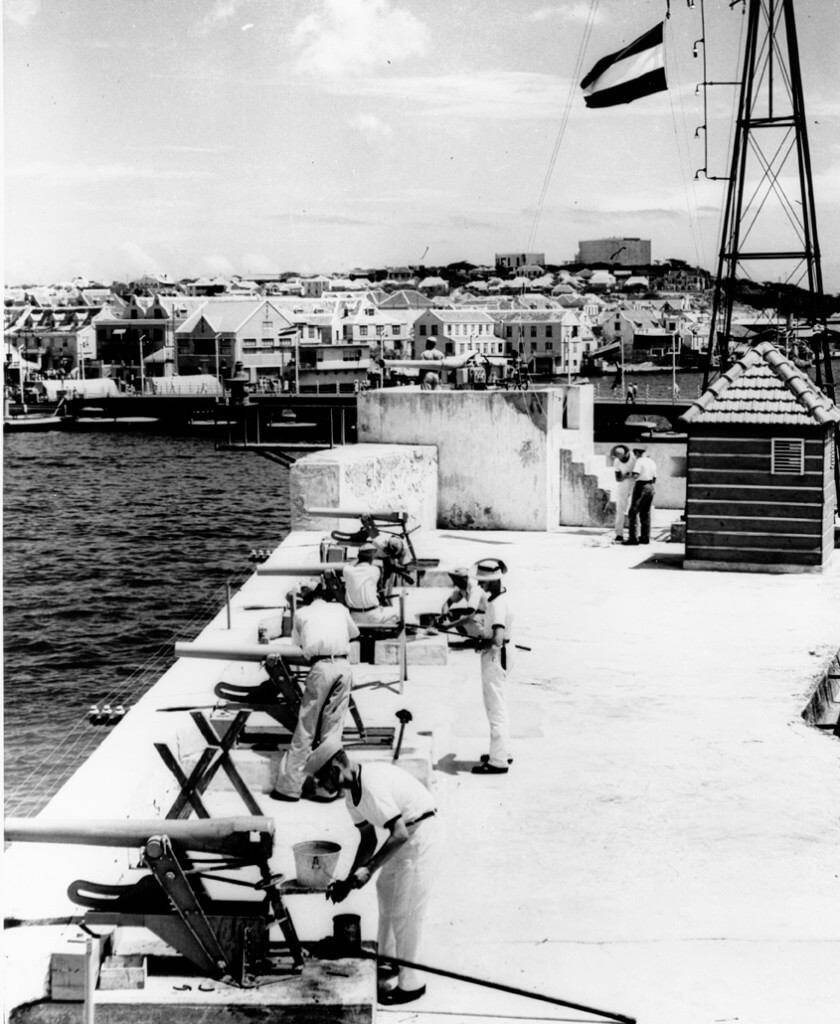
The ‘Schutterij’ was a local military division of infantry, who helped in the defence of Curaçao. In this picture they are seen on guard at the Waterfort alongside some cannons used in World War I. There are two examples of those in the garden of the Curaçao museum.
Source: Archivo Nashonal Kòrsou
German propaganda video: Christmas in the Caribbean Sea
German propaganda video: Christmas in the Caribbean Sea
Germany launched a series of attacks with U-boats against oil tanks and merchant ships around the island. They were responsible for most of the dead on the islands during the war. This video, which is a German propaganda video, tries to convince the audience of the German supremacy in the Caribbean. This video describes Christmas celebrations and one torpedo attack in front of the harbour of Curaçao.
Marching 'Burgerwachter'
Marching 'Burgerwachter'

Isaac Haim (Sha) Capriles was a ‘burgerwachter’ during the Second World War. They were a sort of local volunteer corps whose members helped protect our beaches and government offices.
Source: private collection
Schutterij clothing card
Schutterij clothing card

All members of the Schutterij, our local militia, were obligated to keep their uniform and shoes clean. On this card, kledingkaart, the state of clothes and shoes was noted.
Source: Archivo Nashonal
