My grand father was a Schutterij, Stamboeknummer 4052

Money and power entangled in the war
The Second World War didn’t just bring military tension to the Caribbean—it also reshaped the economic and political landscape of the region, particularly on Curaçao and Aruba. While much of the world faced crisis, both islands experienced an economic transformation driven by their strategic importance in the Allied war effort. In this section, we explore how wartime demand, corporate relocation, and international attention positioned Curaçao and Aruba at the center of power and prosperity.
Fueling the war, shaping the future
During the war, the oil refineries on Curaçao and Aruba played a crucial role in supplying fuel to Allied forces. Operating around the clock, these refineries became essential links in the global war effort. The scale of their production—and the rapid expansion of facilities—drove an economic boom on both islands, attracting workers, increasing infrastructure, and bringing global recognition to the region.
This industrial growth laid the foundation for lasting change. What began as a wartime necessity helped transform the economies of Aruba and Curaçao, positioning both islands as vital players in global energy supply.
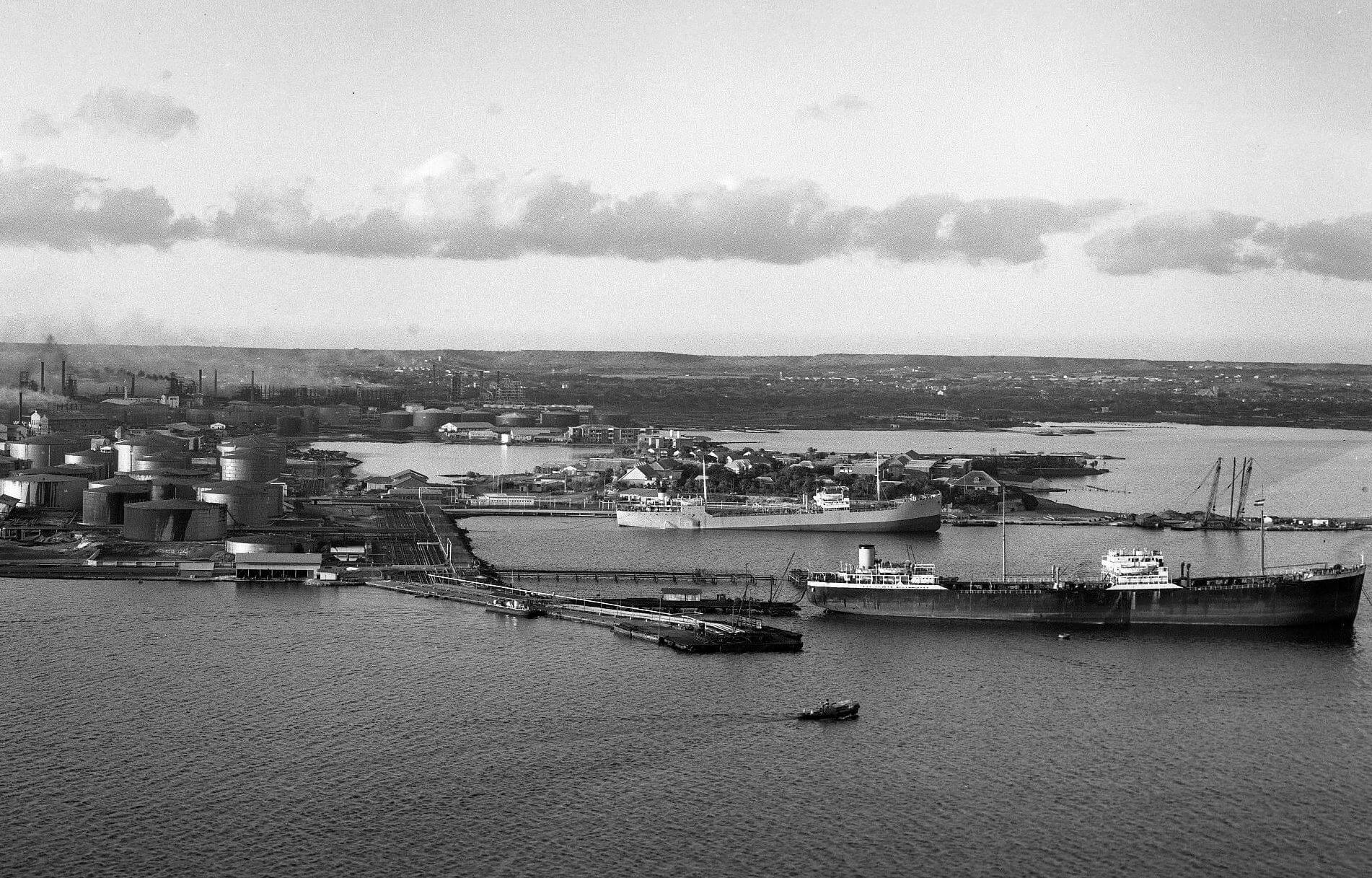
This growth wasn’t only industrial—it also laid the groundwork for long-term economic change. The refinery’s success brought jobs, infrastructure, and a new sense of global relevance to the island. It was a moment that shifted Curaçao’s role from a colonial outpost to a strategic economic hub.
The birth of offshore finance
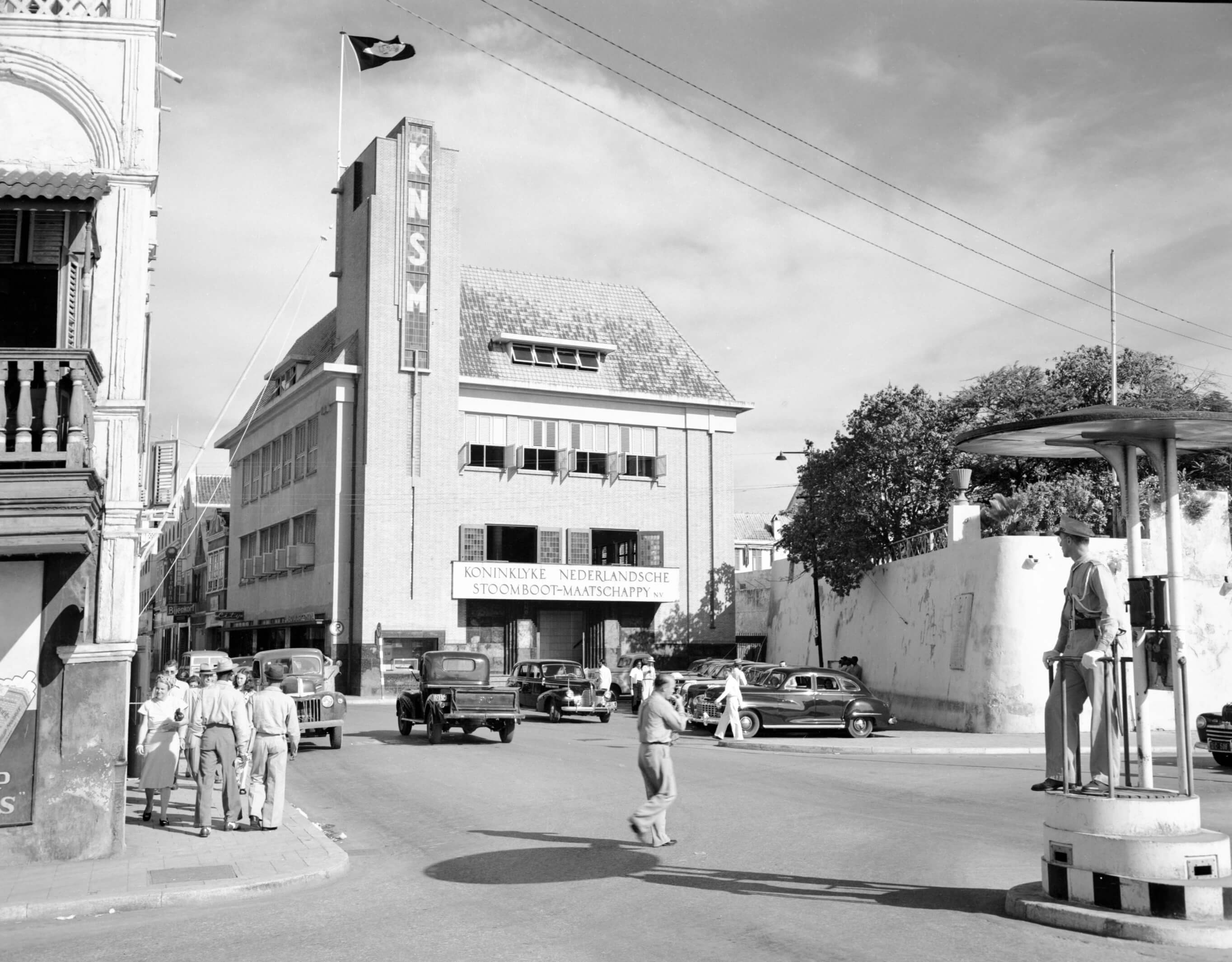
One lesser-known but important development was the so-called ‘transfer of company seats.’ To protect Dutch and Indonesian companies from occupation, many moved their official headquarters to Curaçao. This move—intended as a wartime safeguard—marked the quiet beginnings of what would later become the island’s offshore financial sector.
Business publications and legal documents from this time reflect the seriousness of the effort, showing how Curaçao began to attract international attention not only for its refinery, but also as a safe place to do business during turbulent times.
From confidence to autonomy
Economic success during the war years contributed to growing local confidence and a stronger voice within the Kingdom of the Netherlands. Queen Wilhelmina’s wartime speech — ‘Steunend op eigen kracht, doch met de wil elkander bij te staan’ (‘Relying on our own strength, but with the will to support each other’) — became a symbol of this emerging sense of self-determination.
At the same time, high-profile visits underscored Curaçao’s rising status. First Lady Eleanor Roosevelt, as well as Princess Juliana and Prince Bernhard, visited the island during the war—further recognizing its strategic and political importance at this pivotal moment in history.
Click on the blocks below for more info about these artifacts.
Speech by Queen Wilhelmina
Speech by Queen Wilhelmina
On December 6, 1942, Queen Wilhelmina promised more equality and democracy in the Dutch Kingdom in a radio speech aired by Radio Oranje. In fact, this speech was aimed at the people of Indonesia, who started fighting for independence. But in the Dutch Antilles and Suriname, this was interpreted as a sign to aim for more autonomy in their countries.
Source: Radio Oranje
Laura Hair rollers
Laura Hair rollers
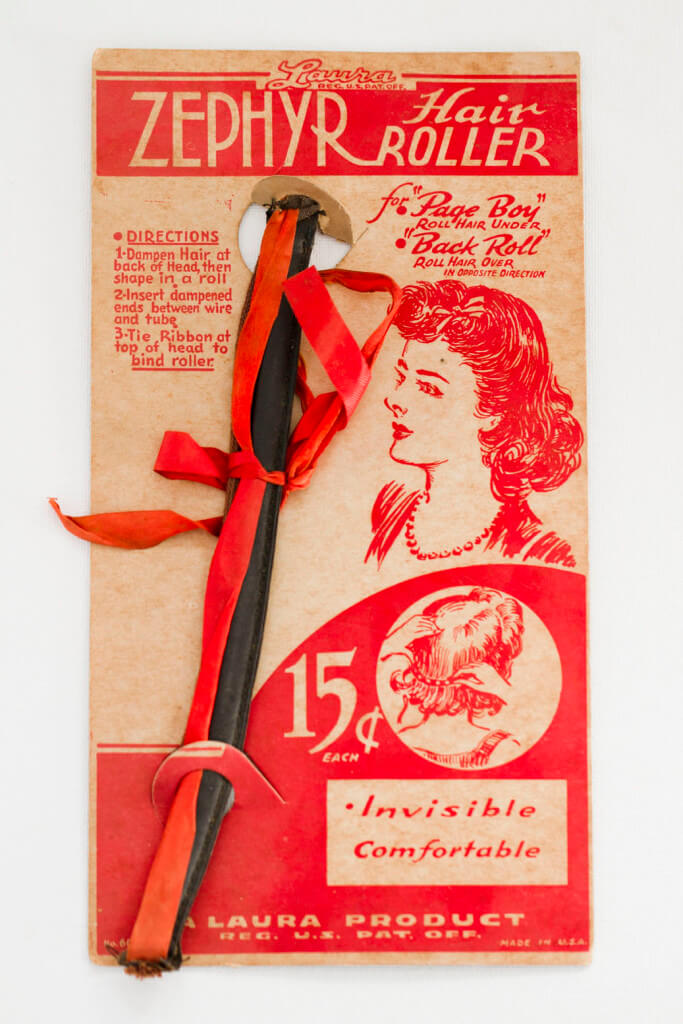
The economy boomed during the war. A lot of new products became popular. In 1944 Shon We Evertsz of the well-known shop El Porvernir in Otrobanda had to double his imports of the Laura Hair rollers for the Curacao market.
Source: NAAM
Coins 1944
Coins 1944

Since the beginning of the century, there existed a currency especially for Curaçao, but it was during the Second World War that a special coin was minted for Territory Curaçao. As it was not possible to mint in Holland, which was occupied by the Germans, the United States Mint in Denver struck these coins in 1944.
Source: Central Bank of Curaçao and St. Maarten
Invitation dinner with Princess Juliana
Invitation dinner with Princess Juliana
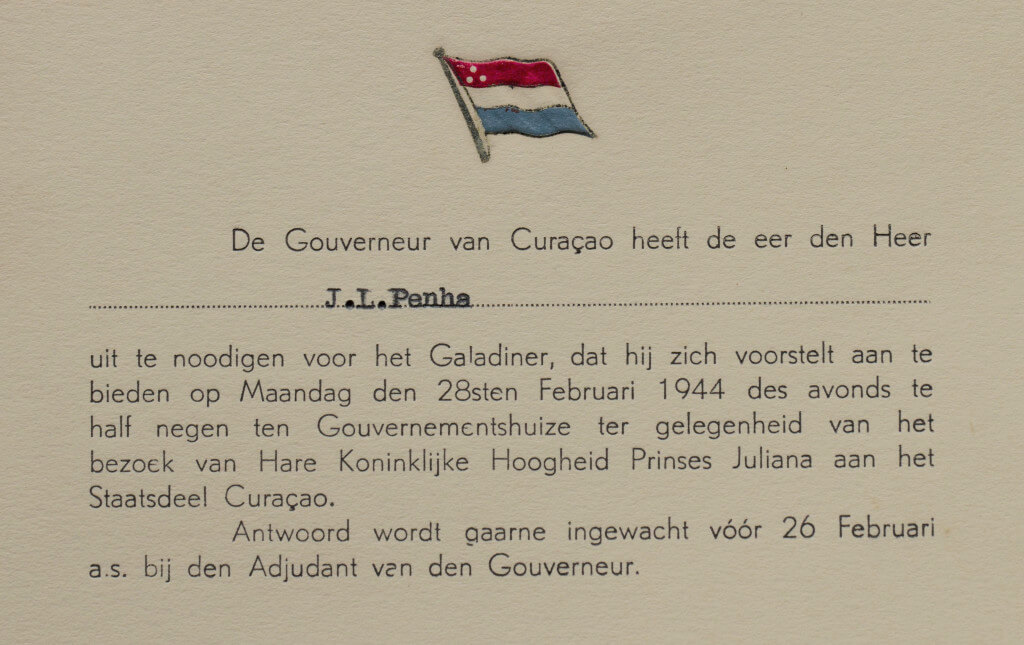
In honour of the visit of Princess Juliana to Curaçao in February 1944, the Governor invited distinguished society guests for a gala dinner.
Source: S.A.L. (Mongui) Maduro Foundation
